By April 2026, the space tourism industry has moved from “experimental” to a high-cadence commercial sector. The rivalry between SpaceX and Blue Origin has intensified, with both companies shifting focus toward heavy-lift orbital capabilities while continuing to serve the private astronaut market.
Here is the state of play for the major players in early 2026.
🚀 1. SpaceX: Pushing the Orbital Frontier
SpaceX remains the leader in orbital tourism, focusing on high-altitude missions and stays on the International Space Station (ISS).
- The Polaris Program: Following the historic success of Polaris Dawn (Sept 2024)—which saw the first commercial spacewalk and reached the highest Earth orbit since Apollo—SpaceX is now preparing for the second mission in the series.
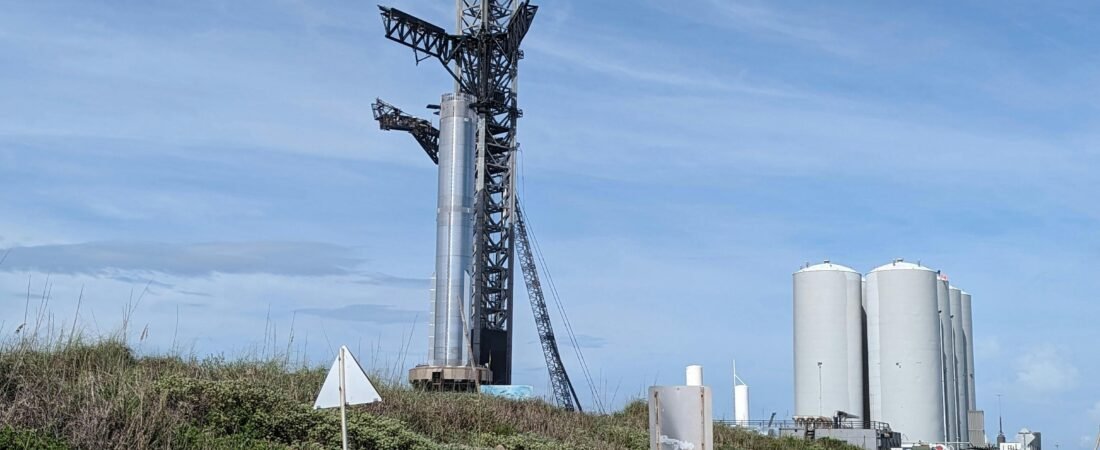
- Starship Progress: Starship is no longer just a prototype. In early 2026, SpaceX is conducting frequent orbital flight tests from Starbase, Texas. While a “Dear Moon” style tourist flight is still in the final safety-testing phase, Starship is already being used for massive Starlink deployments.
- Axiom Missions: SpaceX continues to be the primary “bus” for Axiom Space. Axiom Mission 4 (Ax-4) successfully launched in mid-2025, bringing private astronauts from India, Poland, and Hungary to the ISS. Axiom Mission 5 is currently slated for early 2027.
🌌 2. Blue Origin: The “New Glenn” Era
Blue Origin is currently in a major transitional phase, moving from short suborbital “hops” to massive orbital launches.
- New Glenn’s Debut: Today, April 19, 2026, Blue Origin is scheduled to launch the third mission of its heavy-lift New Glenn rocket. This mission is historic as it marks the first time Blue Origin will attempt to reuse a first-stage booster for an orbital flight.
- New Shepard Pause: In a surprising move in January 2026, Blue Origin announced a pause in New Shepard suborbital flights for at least two years. The company is shifting its engineering resources and personnel to accelerate the Blue Moon lunar lander for NASA’s Artemis program.
- Tourism Milestone: Before the pause, the NS-38 mission (Jan 2026) successfully flew a six-person crew, including Blue Origin’s own Director of Launch Operations, Dr. Laura Stiles.
📊 2026 Space Tourism Leaderboard
| Feature | SpaceX | Blue Origin | Virgin Galactic |
| Current Vehicle | Falcon 9 / Dragon | New Glenn (Orbital) | VSS Unity (Retired) |
| Primary Mission | Orbital / ISS Stays | Orbital Satellites / Lunar | Suborbital Research |
| Next Big Step | Crewed Starship Flight | Lunar Lander (Blue Moon) | Delta Class Entry (2026) |
| Status | Active & Operational | Operational (New Glenn) | Scaling (Delta Class) |
✈️ 3. Virgin Galactic: The Delta Class Shift
Virgin Galactic spent most of 2025 “dark” as they retired their first-generation spaceship (VSS Unity) to focus on the new Delta Class fleet.
- 2026 Launch Window: The company remains on track to begin commercial service with the Delta Class ships in mid-to-late 2026. These new ships are designed for much higher flight cadences—up to two flights per week compared to the once-a-month rhythm of the past.
- Research Focus: A significant portion of the 2026 manifest is dedicated to human-tended research, with contracts signed to fly specialists who will conduct fluid behavior and healthcare experiments in microgravity.
💡 4. The 2026 Market Reality
The space tourism market is projected to reach $1.31 billion by the end of 2026.
- Democratization (Slowly): While still primarily for the ultra-wealthy, the entry of “researcher astronauts” and government-sponsored flights for developing nations is diversifying the demographic of who goes to space.
- Satellite Infrastructure: Both SpaceX and Blue Origin are increasingly using their tourism technology to build global networks. Blue Origin recently introduced TeraWave, a 6 Tbps space-based network designed for global connectivity.
- Watch the live stream of today’s New Glenn booster reuse attempt
- Apply for the next “Citizen Science” seat on an Axiom mission
- Compare Starship vs. New Glenn specs for 2026